
The Daibutsuden at a glance
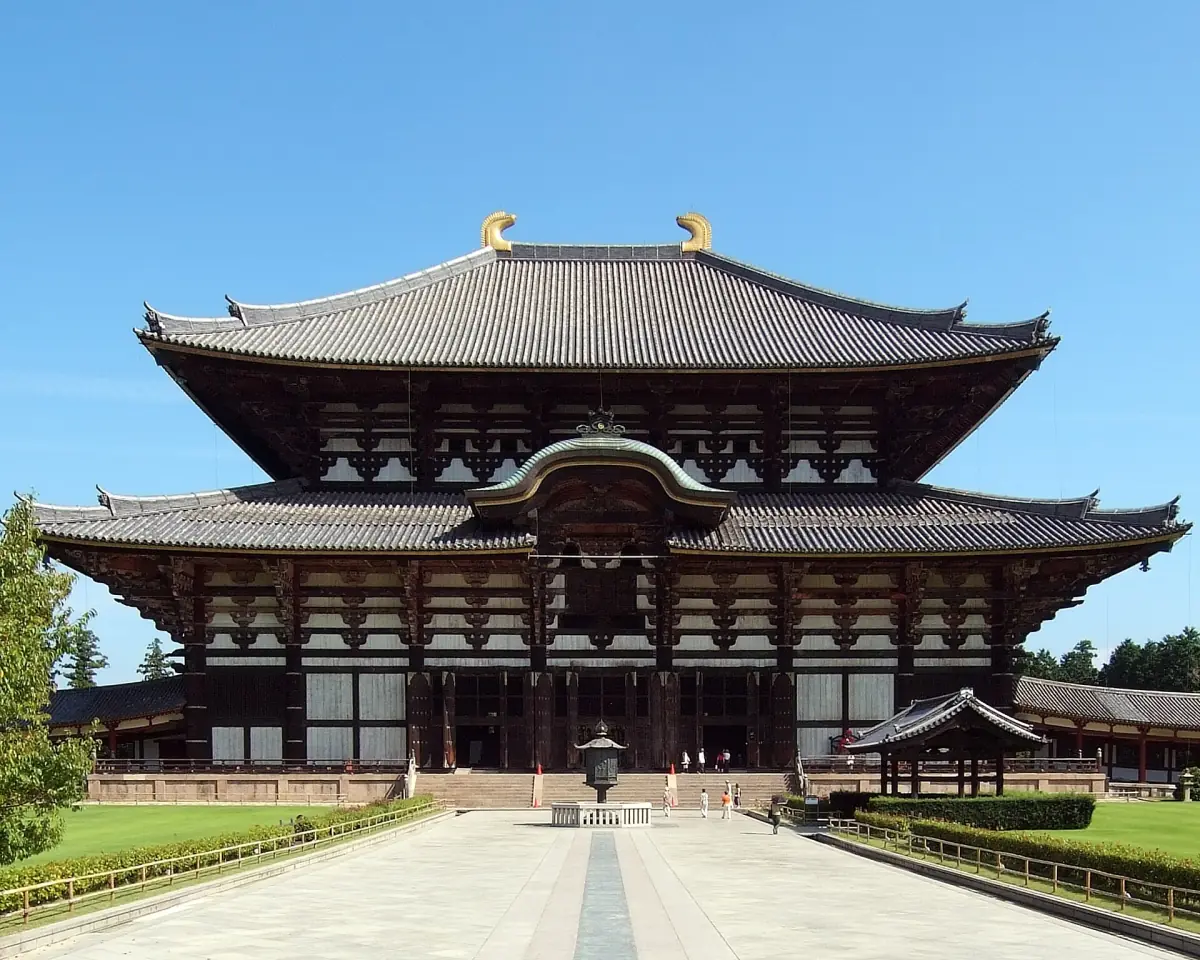
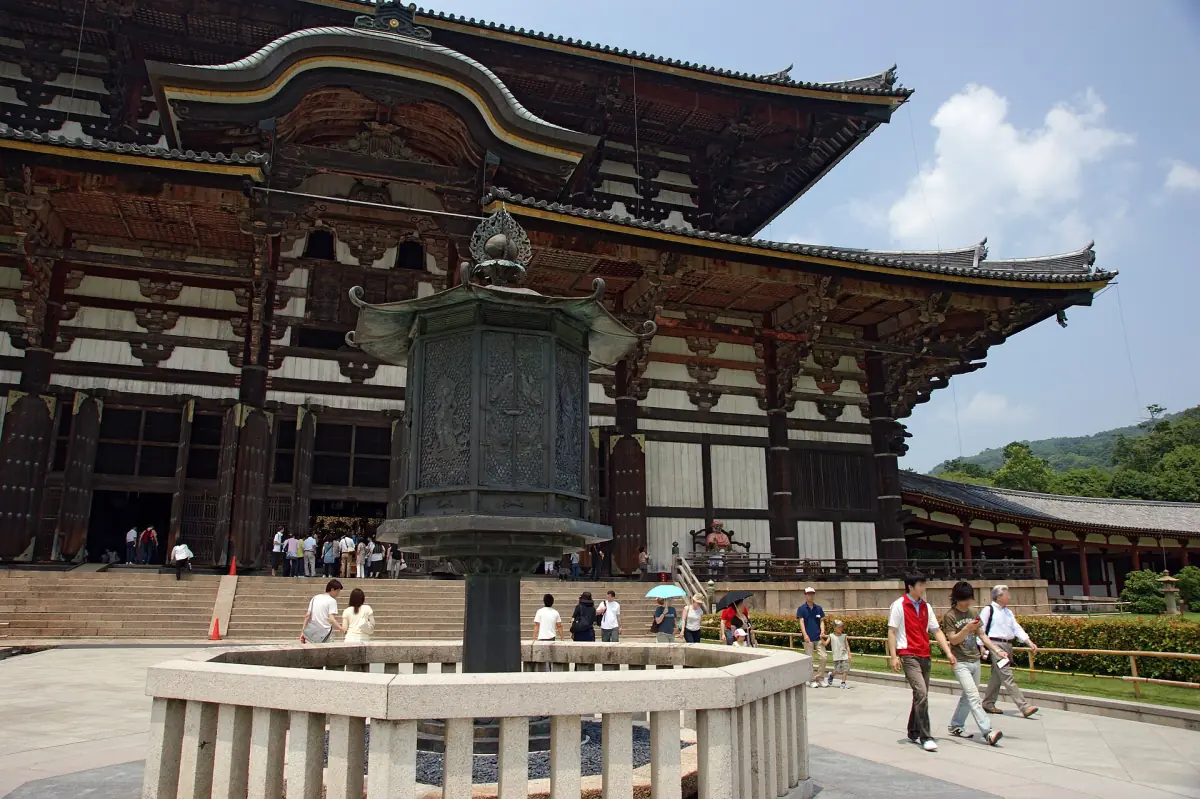
The Daibutsuden, the Great Buddha Hall, is the main hall of Todai-ji. It holds the Great Buddha and is the building most visitors come for. The hall is 57.012 m wide, 50.480 m deep and 48.742 m high. The scale only becomes clear when you stand next to the door.
The hall that stands today is smaller than the original in one direction. It has 7 bays across the front instead of the earlier 11, while depth and height stayed the same. It was dedicated in 1709 after two fires. Adult admission is JPY 800 in 2026, and there is a combined ticket with the museum for JPY 1,200 (see tickets).
Fires and rebuilds
The hall is not a building from the eighth century.
1180: the first fire
A fire after an attack by Taira no Shigehira destroyed large parts of the temple, including the main hall. The Buddha was rededicated in 1185.
1567: war damage
The hall was destroyed again in a conflict between the Miyoshi and Matsunaga. The Buddha was repaired and rededicated in 1692.
1709: the present hall
The hall you visit was dedicated in 1709. It is not an unchanged original from the Nara period.
Why seven bays
The rebuild narrowed the front from 11 to 7 bays. Depth and height stayed the same as before.
Full history →Our picks: tours to the Great Buddha Hall
Walks with a guide that include the hall or Todai-ji entry.
Hand-picked tours, booked through GetYourGuide. Prices are indicative starting prices in US dollars (as of October 2026). Tap a tour for live availability and the current price in your currency.
Half-day UNESCO walk in Nara
Entry to every temple and shrine on the route, a pack of deer food and lunch are included. Other food and drinks are extra.
Check availability →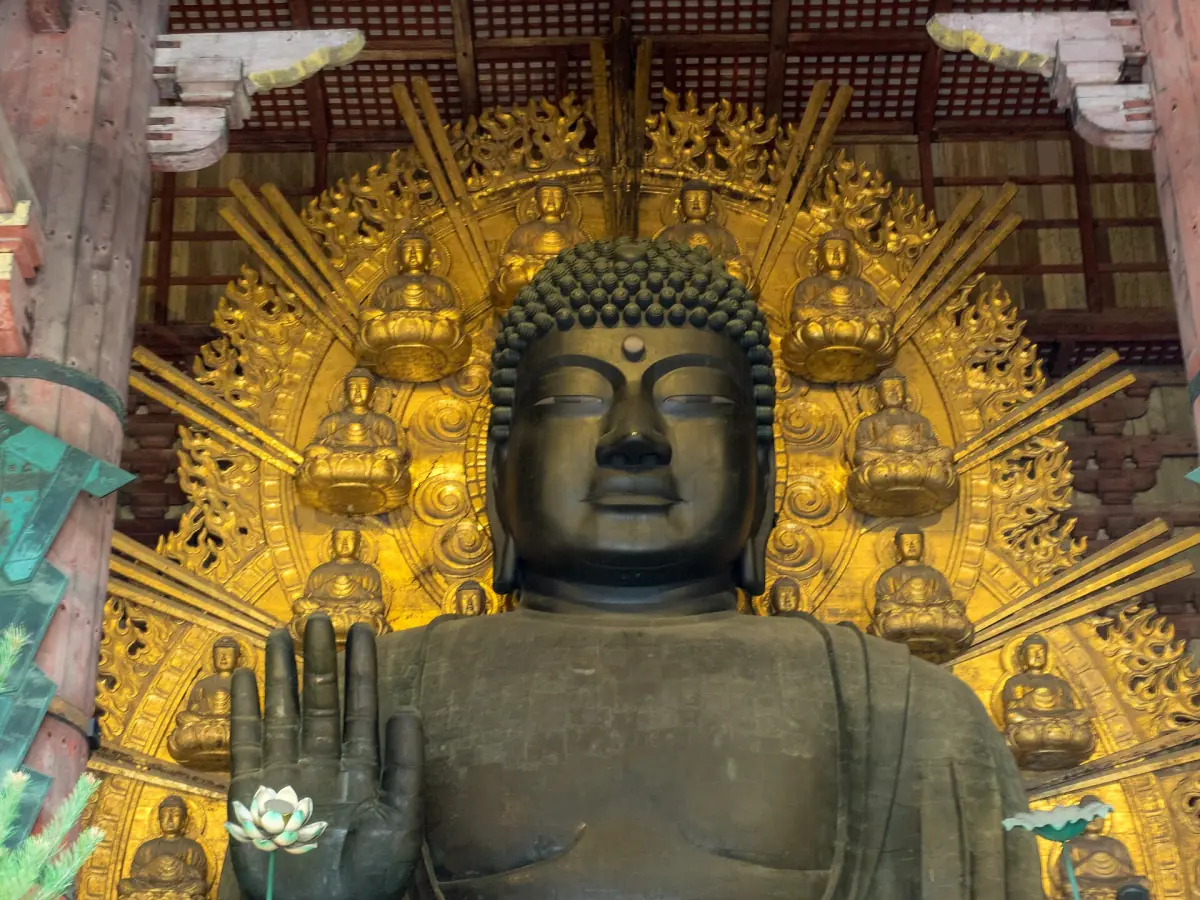
Great Buddha Hall and Kasuga Taisha walk
Three hours with a local guide in your booked language. The Great Buddha Hall and a special prayer area at Kasuga Taisha are included; getting to the meeting point, meals and drinks are not.
Check availability →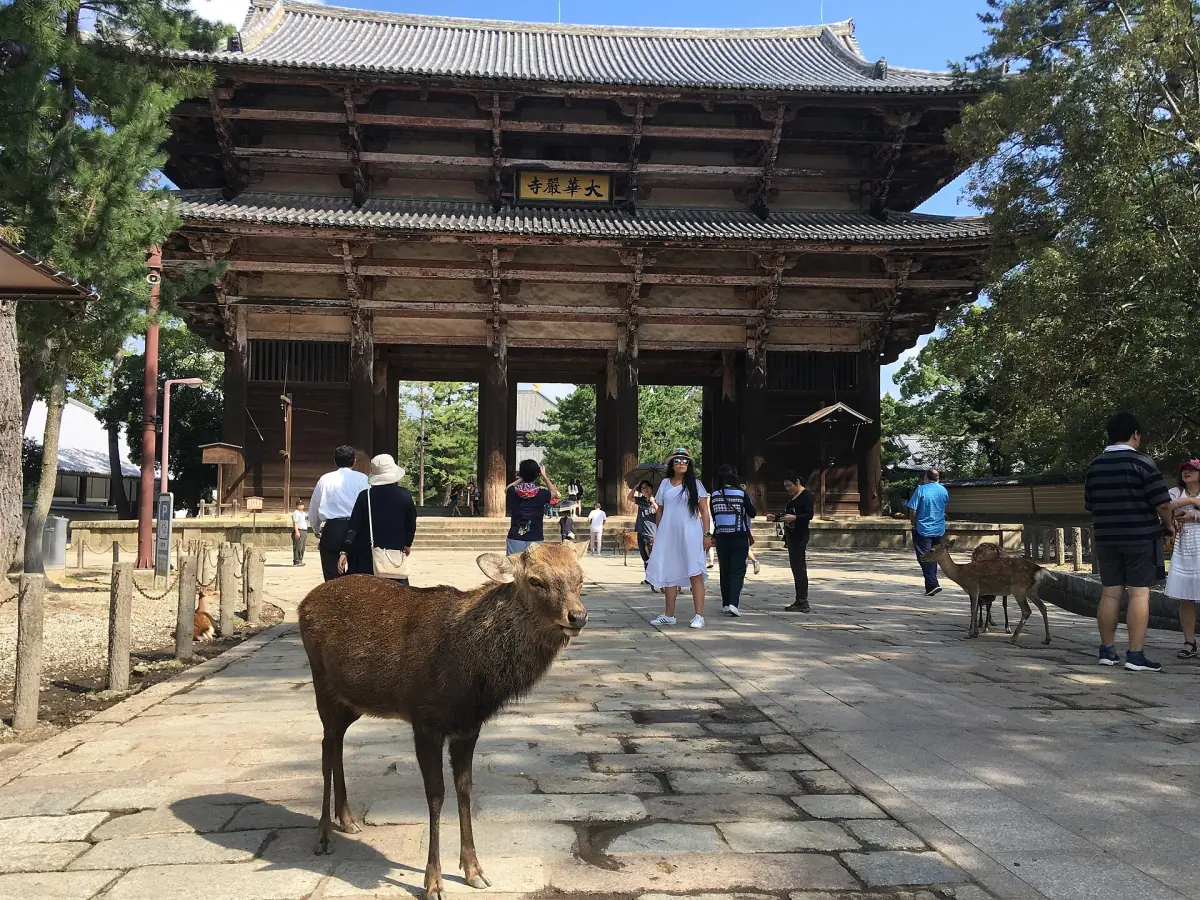
Three-hour guided walk: Nara Park and Todai-ji
A local guide and Todai-ji entry are included.
Check availability →Nara tours that include Todai-ji
Guided walks in Nara and day trips from Kyoto and Osaka that include the Daibutsuden, with live prices and availability.
The pillar hole behind the Buddha
A rectangular opening in a pillar, a size comparison and a tradition.
Behind the Buddha, on its right side, one of the wooden pillars has a rectangular opening about 37 cm high and 30 cm wide. It is said to be about the size of one of the Buddha's nostrils. That is a comparison of size and not a way into the statue.
In tradition, passing through the opening is linked with health and protection from illness. It is a belief, not a proven effect, and there is no guarantee of anything. Whether the passage is open on your day, and who may use it, is decided on site. Ask staff in the hall and follow their instructions. Judge for yourself whether it suits you, and do not force it.
Rules and practical points
What the visitor route allows.
Photos
Personal photos are allowed on the visitor route and inside the hall. Group line-ups and tripods are not. Drawing and flashlights are prohibited. Commercial use of images is restricted separately.
Opening hours
07:30 to 17:30 from April to October and 08:00 to 17:00 from November to March, with no regular closing days. Events or emergencies can change this.
Best time →Audio guide
The audio guide costs JPY 500 and is handed out behind the Daibutsuden ticket gate. It has about 30 minutes of content, with German among the languages.
Tours →Wheelchairs
Wheelchairs can be requested at the entrance of the hall without a reservation, subject to availability. That does not make every part of the site step-free.
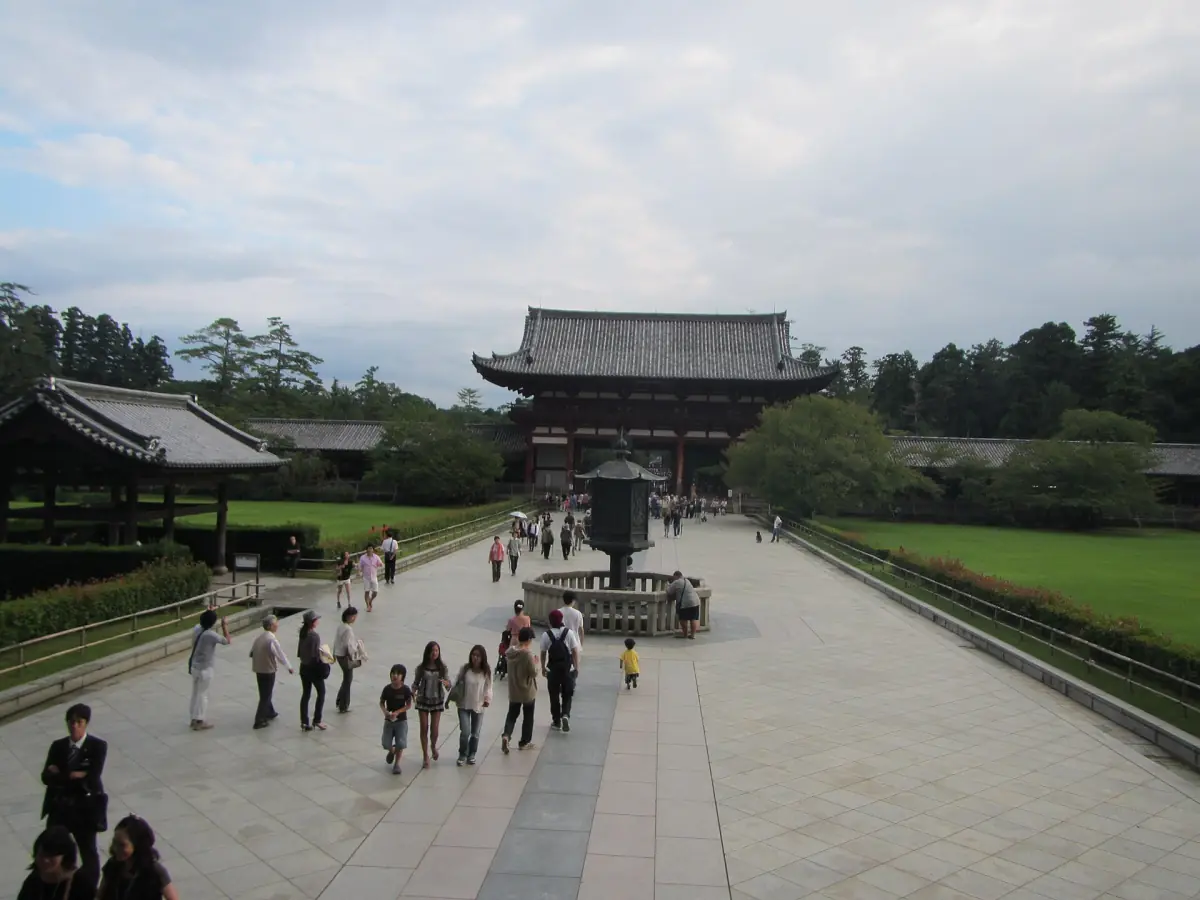
An octagonal bronze lantern stands in front of the hall. It is a good spot to stop before you go in, and it lies beyond the Nandaimon gate. The deer you meet on the approach belong to Nara Park, which has its own guide to the deer of Nara.
Planning your time at the hall
How to fit it into a morning.
The Daibutsuden is the first hall to open in summer, at 07:30, so it suits an early start. From November to March it opens at 08:00. The Hokkedo, the Kaidan-in and the museum open later, so do the main hall first and walk east afterwards.
A standard half-day route through Nara allows about 50 minutes for the whole of Todai-ji. That is enough for the hall and the grounds. Add time if you want the museum, which you can combine with the hall in one JPY 1,200 ticket, or the terrace at Nigatsudo, which is free.
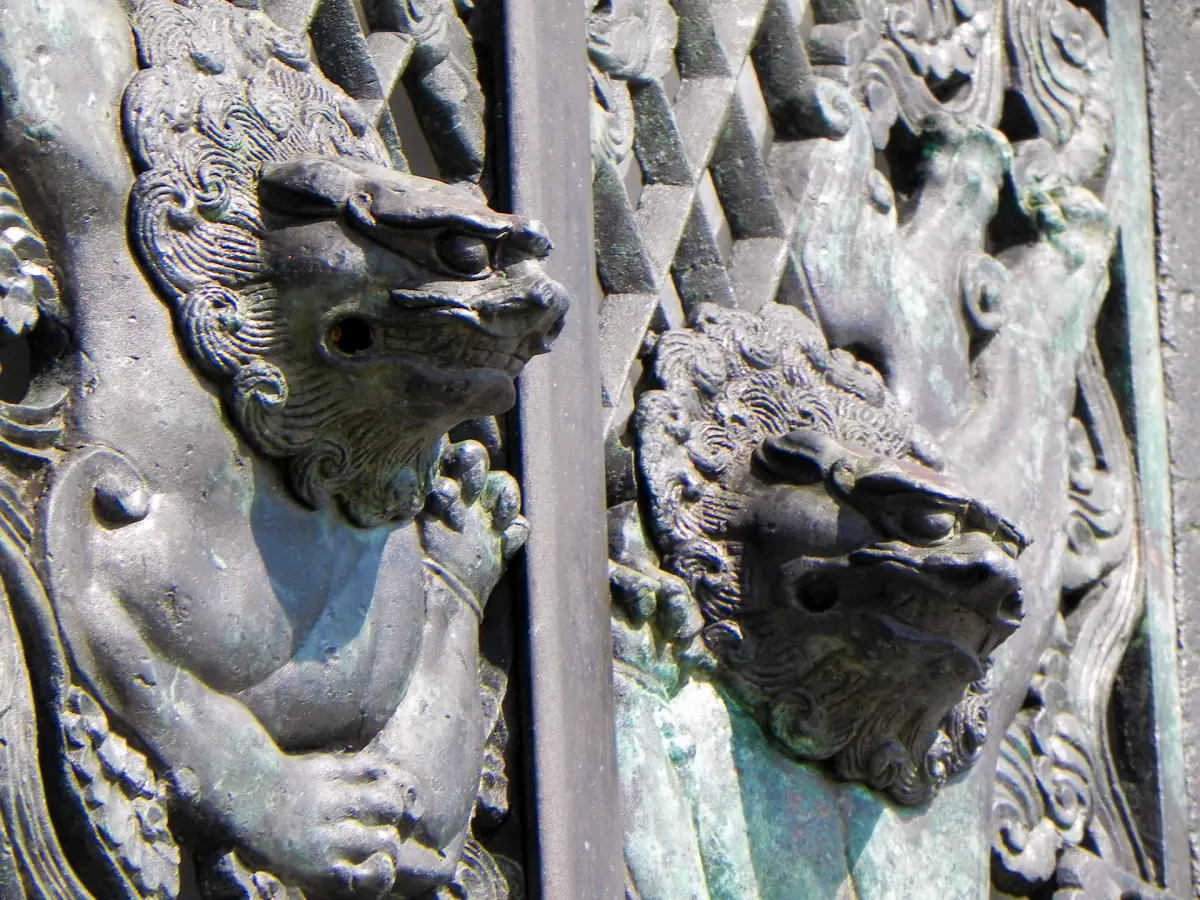
The octagonal bronze lantern in front of the hall carries relief panels that are worth a close look. School groups and tour groups also use the temple, but there is no fixed peak hour you can count on, so do not plan around a guessed quiet time.
The hall in numbers
Measurements and dates in one place.
| Item | Value |
|---|---|
| Width of the hall | 57.012 m |
| Depth of the hall | 50.480 m |
| Height of the hall | 48.742 m |
| Bays across the front | 7 today, 11 before the rebuild |
| Fires and war damage | 1180 and 1567 |
| Dedication of the present hall | 1709 |
| Figure inside | Great Buddha, 14.98 m without pedestal |
Daibutsuden: frequently asked questions
How big is the Daibutsuden?
57.012 m wide, 50.480 m deep and 48.742 m high. The earlier hall was wider, with 11 bays across the front instead of 7.
Is the Daibutsuden the original building?
No. Fires in 1180 and 1567 destroyed earlier halls, and the present building was dedicated in 1709.
Can you crawl through the hole in the pillar?
The opening is about 37 cm high and 30 cm wide and sits behind the Buddha. Whether it is open on the day is decided on site. Ask staff, and do not force yourself through.
Can I take photos inside?
Yes, personal photos are allowed on the visitor route. Tripods and group line-ups are not, and neither are drawing and flashlights.
How much is the Daibutsuden ticket?
JPY 800 for adults and JPY 400 for elementary school children in 2026. The combined ticket with the museum is JPY 1,200. You pay in cash.