The Great Buddha of Nara in numbers
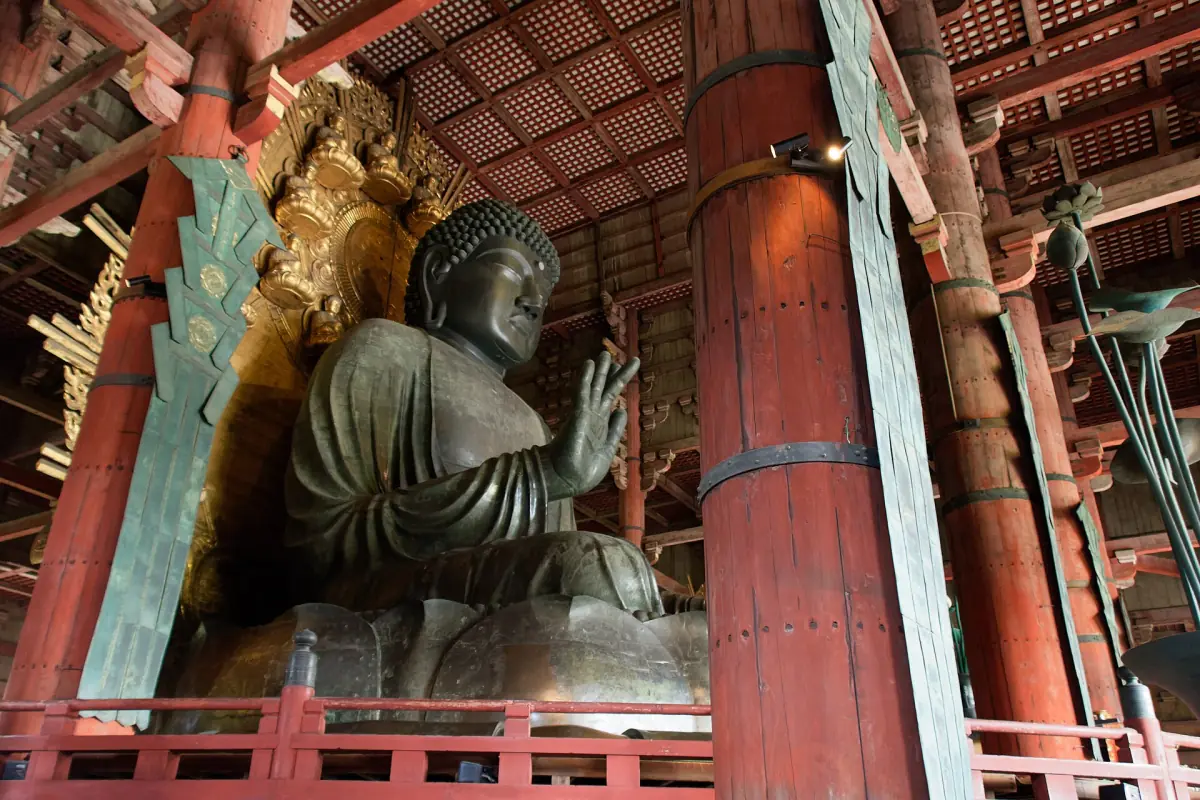
The Great Buddha is a seated figure of the Buddha Vairocana, called Rushana or Birushana in Japanese. It is the main image of the Daibutsuden, the hall at Todai-ji, and it should not be confused with the Great Buddha of Kamakura, which is a different statue in a different city.
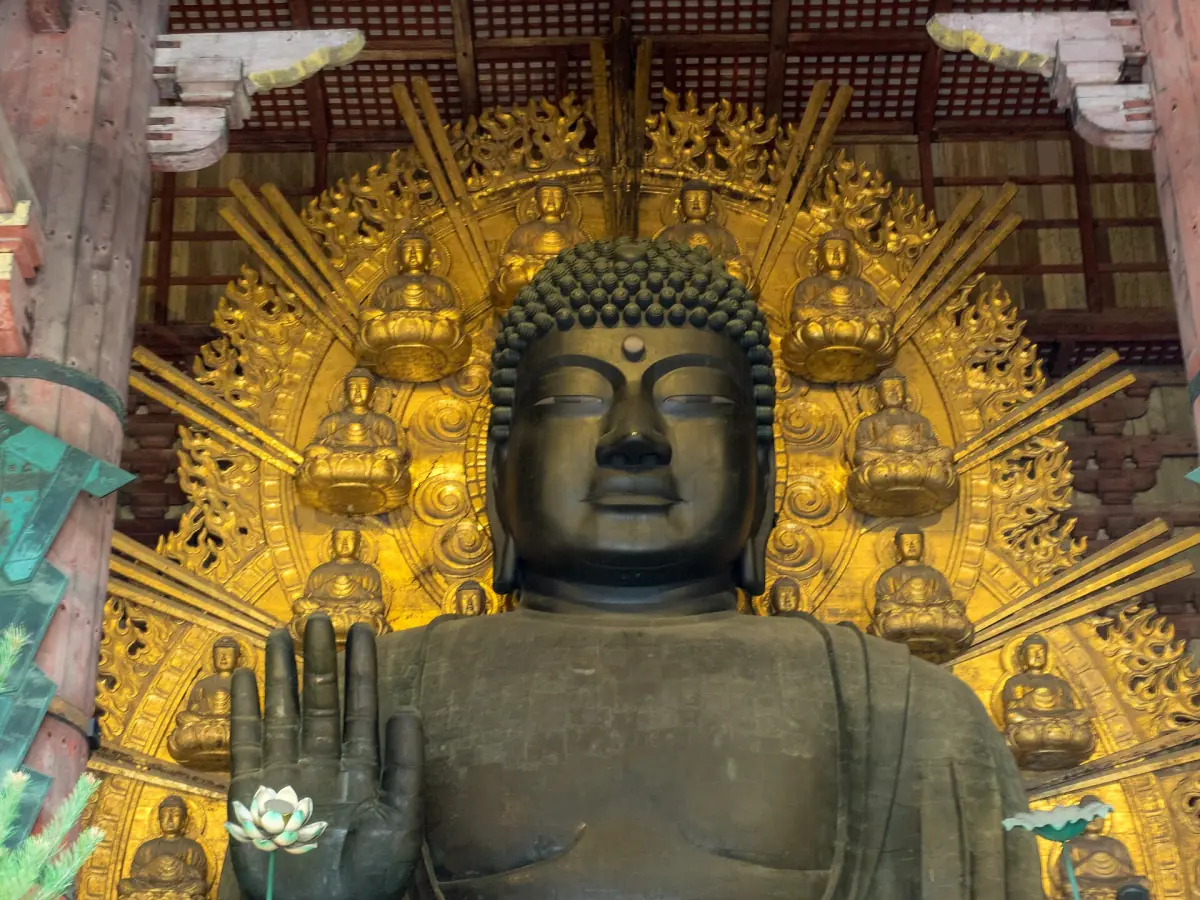
The figure is 14.98 m high, often rounded to about 15 m. That does not include the pedestal, which adds another 3.05 m. The face is 5.33 m long, an ear is 2.54 m long and an eye is 1.02 m long. These measurements give a sense of scale that photos rarely do. Entry to the hall is JPY 800 for adults in 2026 (see tickets).
When and why it was made
Three dates to remember: 743, 749 and 752.
743: the decree
Emperor Shomu ordered the construction of the Great Buddha. The temple grew from a smaller predecessor and became the leading temple of the state network of provincial monasteries.
749: the casting is finished
The great statue was completed six years after the decree.
752: the dedication
The great dedication ceremony took place in this year. It marks the dedication of the Buddha, not the construction date of the hall that stands today. That hall was dedicated in 1709, as the Daibutsuden page explains.
Later repairs
In 855 the head fell in an earthquake and was restored. After the fire of 1180 the figure was rededicated in 1185 under the monk Chogen, and after the war damage of 1567 it was rededicated again in 1692. The history page has the full timeline.
Our picks: tours to the Great Buddha
Guided walks that take you into the hall of the Great Buddha.
Hand-picked tours, booked through GetYourGuide. Prices are indicative starting prices in US dollars (as of October 2026). Tap a tour for live availability and the current price in your currency.
Great Buddha Hall and Kasuga Taisha walk
Three hours with a local guide in your booked language. The Great Buddha Hall and a special prayer area at Kasuga Taisha are included; getting to the meeting point, meals and drinks are not.
Check availability →Deer, Great Buddha and mochi tasting
An English-speaking local guide, Todai-ji entry and a fresh mochi tasting. Deer food comes as one pack per group.
Check availability →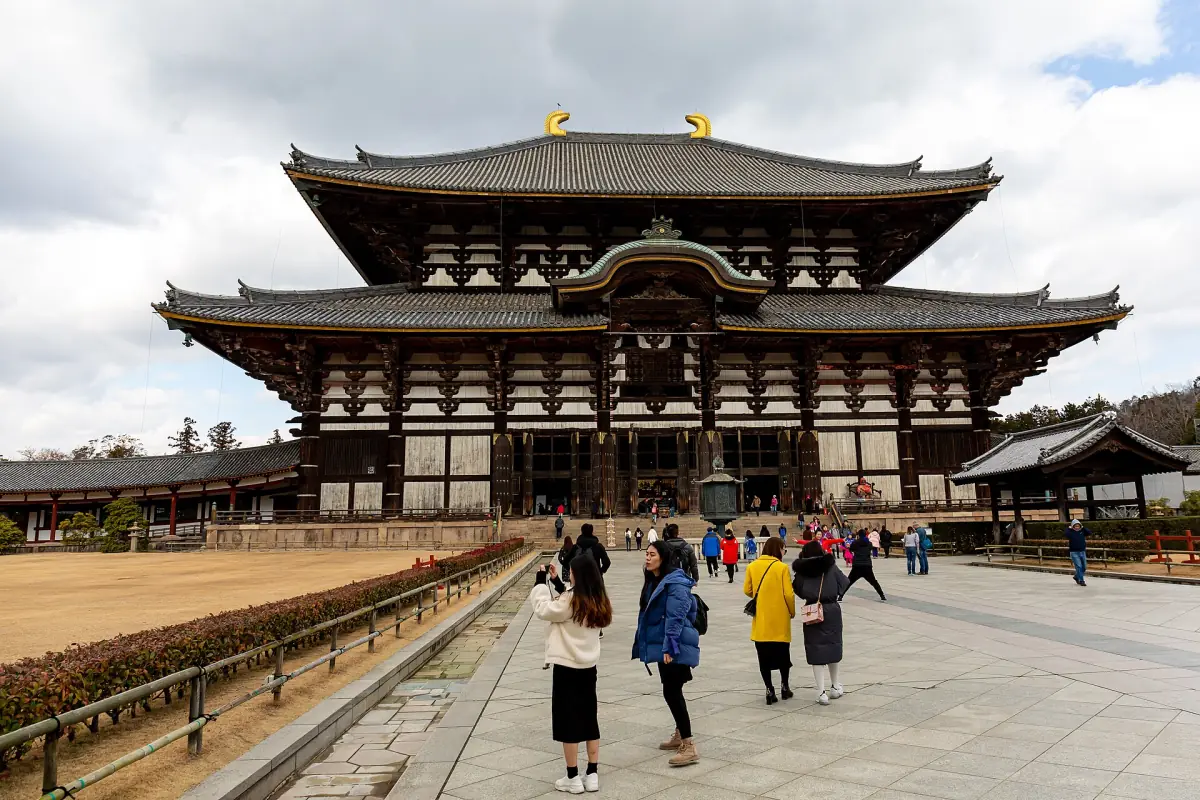
Small-group walk to Todai-ji and the Great Buddha
Three hours with a guide, a visit to Nara Park and Todai-ji entry included. Getting to the meeting point, meals and drinks are not.
Check availability →Nara tours that include Todai-ji
Guided walks in Nara and day trips from Kyoto and Osaka that take you to the Great Buddha, with live prices and availability.
Which parts are original?
The statue you see is a mix of eras.
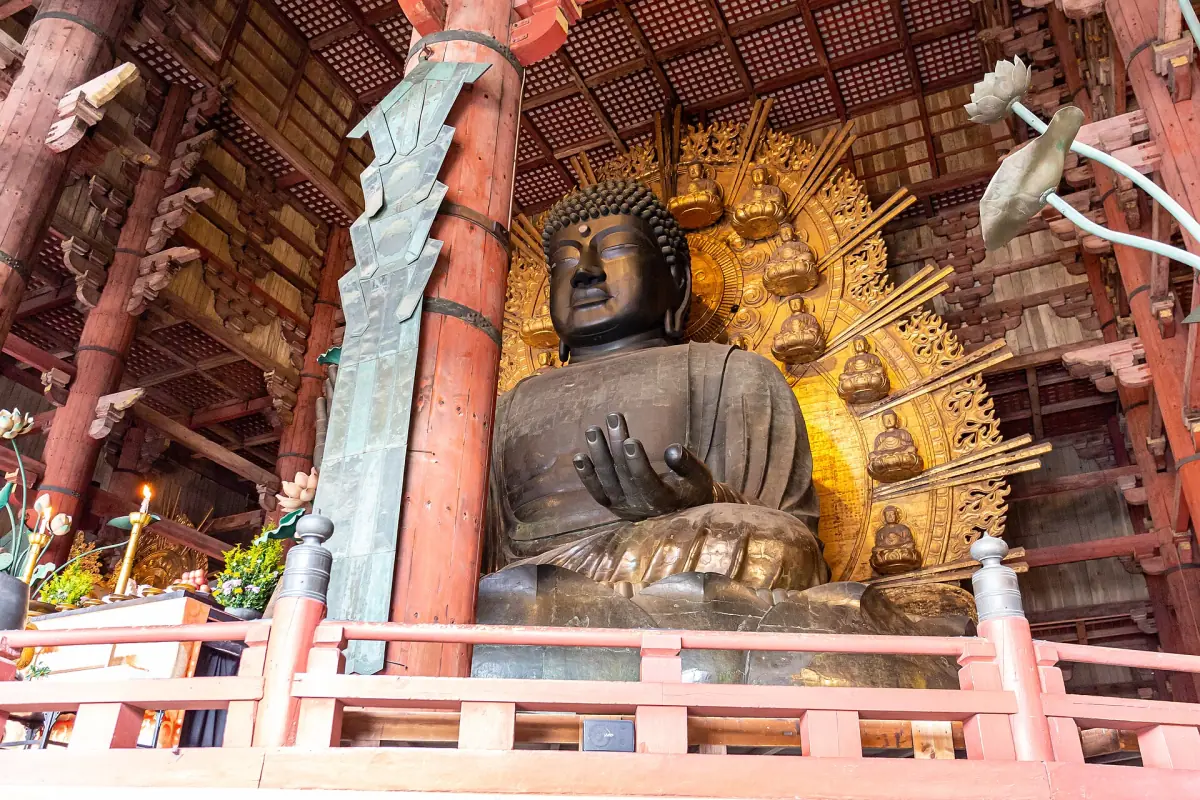
The Great Buddha has been damaged and repaired several times, so it is not a single piece from the eighth century. The head dates from a renewal in the Edo period. The upper body was repaired in the Muromachi and Momoyama periods. Parts of the lower body, the legs and the pedestal still come from the time the statue was made.
That matters for what you are looking at. Treat the Buddha as a work that has been kept alive for more than 1,200 years, not as an untouched original. The lower body and the pedestal are the places closest to the original casting.
How heavy is it?
Weight figures range from about 250 tonnes to more than 400 tonnes of bronze used in the casting. Treat any single number as approximate. Superlatives such as the biggest Buddha in Japan are better replaced by the measurements above.
Seeing the Great Buddha: practical tips
What helps on the day.
Go early
The Daibutsuden opens at 07:30 from April to October and at 08:00 from November to March. A visit at opening is a planning option, not a promise of an empty hall.
Best time to visit →Photos
Personal photos are allowed on the visitor route and in the hall. Group line-ups and tripods are not, drawing is not allowed, and flashlights are prohibited. Commercial use of images is restricted separately.
The pillar hole
Behind the Buddha, on its right side, a pillar has an opening about 37 cm high and 30 cm wide. Passing through it is linked in tradition with health. Whether it is open on your day is decided on site.
Pillar hole →Time
A standard half-day route through Nara allows about 50 minutes for the whole of Todai-ji. Add time for the museum and the eastern halls.
After the hall, the walk back passes the Nandaimon gate and its guardians. The deer around the grounds belong to Nara Park, and the Nara Park guide covers the temple from the park side.
The Buddha in context
Where the statue fits in the temple and in Nara.
Todai-ji was the leading temple of the state network of provincial monasteries and a center for rituals and for training learned monks. Today the temple is part of the World Heritage site Historic Monuments of Ancient Nara, inscribed in 1998. The listing covers several monuments in the city, so the Buddha and the hall are one part of it and not the whole.
| Part of the figure | Measurement |
|---|---|
| Height of the figure | 14.98 m |
| Pedestal | 3.05 m |
| Face | 5.33 m long |
| Ear | 2.54 m long |
| Eye | 1.02 m long |
For how the building was lost twice and rebuilt, see the Daibutsuden page. For the fee and the combined ticket, see tickets.
Great Buddha of Nara: frequently asked questions
How tall is the Great Buddha of Nara?
The figure is 14.98 m high without the pedestal, which adds 3.05 m. Its face is 5.33 m long. Rounded, it is about 15 m.
When was the Great Buddha built?
Emperor Shomu ordered it in 743, the casting was finished in 749 and the great dedication ceremony was held in 752.
Is the statue original?
Only in part. The head is a renewal from the Edo period, the upper body was repaired in the Muromachi and Momoyama periods, and parts of the lower body, the legs and the pedestal come from the time it was made.
How much does it cost to see the Great Buddha?
Entry to the Daibutsuden is JPY 800 for adults and JPY 400 for children in 2026. A combined ticket with the museum is JPY 1,200. Payment is in cash. See tickets.
Is the Great Buddha of Nara the same as the one in Kamakura?
No. They are separate statues in different cities. The one in Nara is a seated Vairocana inside the Daibutsuden at Todai-ji.